Signals, Signs and Pavement Markings · Pavement Markings
Pavement Markings
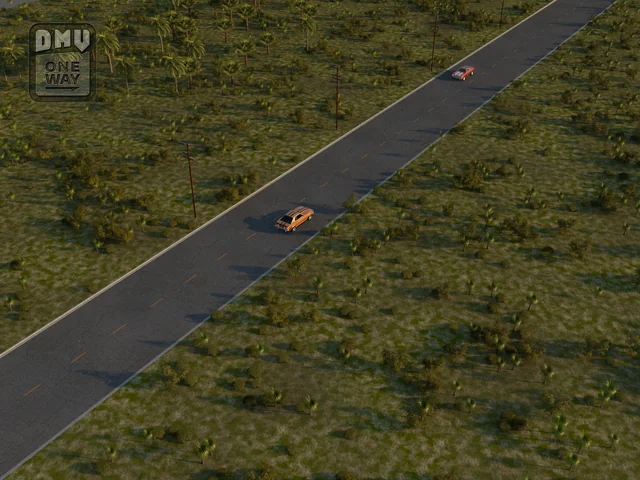
Generally (Pavement / Highway Markings).
Likewise signs, highway markings warn, regulate, and inform. They can be of white and yellow color. Each sort of line has its special meaning:
Broken or dashed white lines indicate traffic lanes on roads with more than one lane moving in the same direction. You should drive within these lanes and not cross the lines. Passing is allowed when it is safe to do so [see picture (A) below].
Solid white lines are used in several ways. If solid white lines separate lanes of traffic, do not change lanes or pass. The only exception is a white line separating a High Occupancy Vehicle (HOV) lane on a freeway. You may cross to enter or exit the HOV lane. A solid white line can also mark the edge of the highway or the boundary between a travel lane and a highway shoulder.
Yellow lines divide traffic lanes moving in opposite directions.
Broken or dashed yellow lines let you pass when it is safe to do so [see (B)].
Solid yellow lines mean that you can’t cross over or pass. A solid yellow line can also mark the left edge on multi-lane divided highways.
Double yellow lines indicate that you are not allowed to pass if the lines on your side are solid [see picture (C) to the right].